The Life Sciences Compliance Roadmap: What You Need, When You Need It, and In What Order

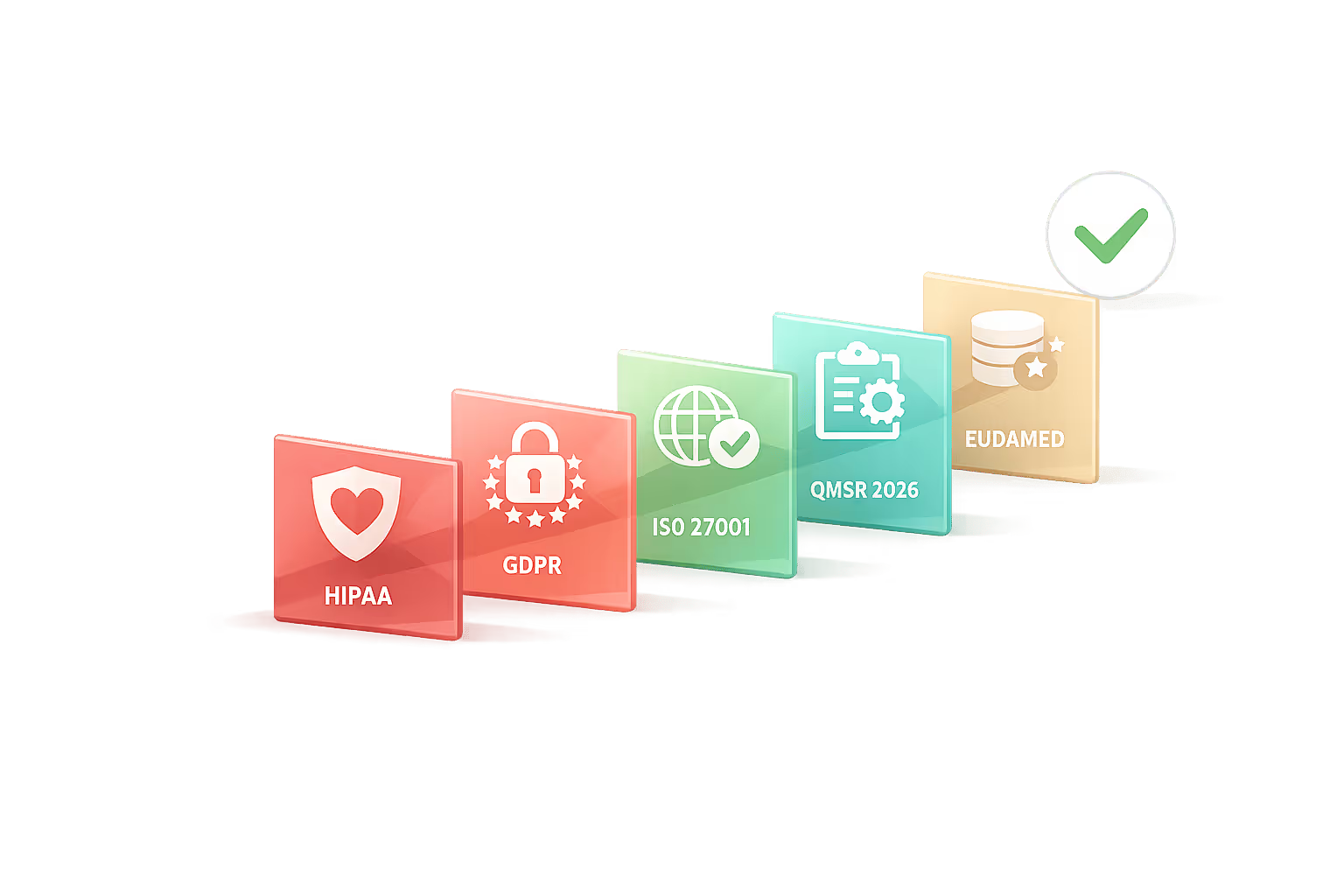
Staying compliant in life sciences isn't just about avoiding fines - it protects patient data, ensures market access, and builds trust with investors and partners. Here's what you need to know:
- Key Regulations: HIPAA, GDPR, FDA QMSR, and ISO 27001 are essential for managing sensitive data and meeting market expectations. Non-compliance can cost millions in fines and lost revenue.
- Critical Deadlines: February 2, 2026, marks the FDA's QMSR deadline. May 28, 2026, is the EUDAMED compliance deadline for EU medical device manufacturers.
- Prioritization: Focus on legal requirements first (e.g., HIPAA, GDPR), followed by certifications like ISO 27001 for credibility, and frameworks like HITRUST for competitive edge.
- Unified Compliance: Map overlapping regulations to reduce redundant work. For example, access controls can meet HIPAA, GDPR, and ISO 27001 requirements simultaneously.
- Automation: Use compliance tools to simplify evidence collection, reduce errors, and speed up certification processes.
Compliance isn't just a legal requirement - it's a way to safeguard your business and drive growth. Let's dive into how to structure your compliance program effectively.

Life Sciences Compliance Roadmap: Priority Framework and 2026 Deadlines
Identifying Which Regulations Apply to Your Organization
How to Determine Your Regulatory Requirements
Understanding which regulations apply to your organization is the foundation of any compliance strategy. Life sciences companies, in particular, handle sensitive data across various markets, each with its own set of regulatory expectations.
Start by classifying the types of data your organization manages. For example:
- Handling Protected Health Information (PHI) means compliance with HIPAA.
- Managing data from EU citizens brings GDPR into play.
- Using electronic records and signatures requires adherence to FDA 21 CFR Part 11 standards.
Next, assess your entity's status under specific regulations. For instance, HIPAA differentiates between "Covered Entities" (like healthcare providers or health plans) and "Business Associates" (vendors managing PHI on behalf of Covered Entities). This classification significantly impacts your legal responsibilities and potential liability. Misclassifying your role can lead to compliance failures and costly incidents.
Your industry segment also determines specific obligations. Medical device manufacturers must align with FDA 21 CFR 820 (Quality System Regulation) and adhere to Section 524B requirements, which emphasize cybersecurity as a key aspect of product quality. Meanwhile, pharmaceutical companies need to comply with GxP regulations (Good Manufacturing, Clinical, and Laboratory Practices) and EU Annex 11 for computerized systems.
Lastly, consider the expectations of your market and partners. Beyond legal requirements, certifications such as ISO 27001 are increasingly seen as trust benchmarks. According to an ISO survey, ISO 27001 certifications grew by 32% year-over-year as of 2021.
Once you’ve identified your regulatory requirements, you can focus on streamlining overlapping obligations.
Managing Multiple Overlapping Regulations
Life sciences organizations often juggle several regulations at once. A unified control model can help by creating a single operational framework that meets multiple compliance requirements simultaneously. For instance, conducting monthly access reviews can provide evidence for GDPR's data protection rules, HIPAA's security safeguards, and SOC 2's access control standards.
By mapping overlapping regulatory controls, you can cut down on redundant efforts and documentation. For example:
- Both FDA 21 CFR Part 11 and ISO 27001 require access controls and audit trails.
- EU GMP Annex 11 and ISO 27001 share requirements for change control and data archiving.
Here’s a quick look at how some regulations align with ISO 27001:2022 controls:
| Regulation / Guideline | Key Requirement | Corresponding ISO 27001:2022 Control |
|---|---|---|
| FDA 21 CFR Part 11 | Record retention, audit trails, and record protection | A.12.4.1 (Logs), A.9 (Access control), A.18.1.4 (Evidence) |
| EU GMP Annex 11 | Data archiving, change control, and access security | A.17.1.3 (Backup), A.12.1.3 (Change control), A.9.2.2 (User access) |
| FDA 21 CFR 820 | Design controls and CAPA (Corrective and Preventive Action) | A.16.1.5 (Incident response), Clause 6.3 (Planned changes) |
| HIPAA Security Rule | Safeguarding the integrity, availability, and confidentiality of ePHI | Annex A (Technical, Physical, and Organizational controls) |
This cross-referencing approach shifts compliance from a fragmented process to an integrated system.
"Compliance maturity comes from operational consistency, not policy volume."
The focus should be on creating controls that are consistently executed and provide evidence that satisfies multiple regulatory bodies.
Example: A Clinical Laboratory with Multiple Compliance Needs
Let’s take the example of a clinical laboratory. Such a lab processes diagnostic tests, uses medical devices for analysis, and stores patient data in cloud systems - all of which bring various regulatory demands.
First, since the lab handles PHI, it must comply with HIPAA’s Privacy and Security Rules. This means conducting regular risk analyses, encrypting data, enforcing strict access controls, and assigning oversight roles.
The HIPAA Security Rule requires ongoing risk analysis. Treating this as a one-time checkbox exercise can lead to violations. Instead, ensure the analysis is thorough and regularly updated.
If the lab uses medical device platforms, it must also comply with FDA 21 CFR 820 for quality systems and possibly Section 524B for cybersecurity measures. Additionally, if the lab processes data from EU citizens, GDPR requirements for data collection, storage, and processing apply.
The lab must also ensure that third-party vendors sign Business Associate Agreements (BAAs), binding them to HIPAA requirements. A compliance lapse by a vendor could disrupt operations or trigger investigations.
This example highlights why a unified compliance program is essential for managing diverse regulatory needs effectively.
sbb-itb-ec1727d
Prioritizing Compliance Tasks by Deadline and Business Impact
Critical Regulatory Deadlines for 2026
February 2, 2026, is a firm deadline for the FDA's Quality Management System Regulation (QMSR). This regulation replaces the older Quality System Regulation (21 CFR Part 820) with a framework that references ISO 13485:2016. Medical device manufacturers must meet these requirements by this date - no extensions, no exceptions.
"February 2, 2026 isn't a suggestion. It's not a goal date. It's a hard regulatory deadline." - Aligntra
One major change under QMSR is the increased transparency in inspections. Documents that were previously exempt - such as internal audit reports, management review minutes, and supplier audit reports - will now be subject to FDA review. This shift means manufacturers need to ensure these records are ready for inspection and align with ISO 13485 standards.
In addition to QMSR, May 28, 2026, marks the deadline for mandatory EUDAMED compliance for EU medical device manufacturers. This includes full implementation of the Actor, UDI, and Certificate modules. The EU AI Act also introduces phased obligations, with general requirements starting August 2, 2026, and high-risk AI regulations for medical devices taking effect on August 2, 2027.
For organizations working with protected health information or EU personal data, regulations like HIPAA and GDPR remain in full force. While these frameworks don't have new deadlines in 2026, their requirements are ongoing. GDPR violations, for example, can result in fines of up to €20 million or 4% of global revenue, whichever is higher.
How Non-Compliance Affects Your Business
Missing these deadlines or failing to meet compliance standards can have serious consequences. Data breaches in the life sciences sector can cost as much as $11 million per incident, and the expense of non-compliance is estimated to be 2.71 times higher than maintaining a compliant program. Beyond financial penalties, organizations risk operational disruptions, loss of customer trust, and delays in revenue.
In 2023, the FDA issued over 6,000 Form 483 observations, with data integrity failures being one of the most common issues. These observations can halt production, delay clinical programs, or even lead to product seizures, putting business operations at immediate risk.
Failing to secure certifications like SOC 2 or ISO 27001 can also block access to enterprise sales opportunities, as these frameworks are now baseline requirements for procurement. Similarly, companies looking to enter European digital health markets face significant hurdles without GDPR compliance and ISO 27001 certification.
"Investors, partners, and acquirers now treat compliance maturity as a proxy for execution discipline and long-term value creation, not just a cost center." - Harshvardhan Kariwala, CEO, V-Comply
Contractual obligations add another layer of risk. Businesses that can't meet requirements like signing Business Associate Agreements (BAAs) or fulfilling insurance criteria may lose key customer segments, leading to missed revenue and growth opportunities.
Building a Timeline for Your Compliance Initiatives
To manage these risks and avoid penalties, it's essential to develop a structured timeline for your compliance efforts. After identifying the regulations that apply to your organization, focus on initiatives based on their deadlines and potential business impact.
A quick 30-minute mapping exercise can help separate essential certifications from optional ones for each market segment. This approach ensures you prioritize certifications that directly support revenue opportunities.
Here’s a simple three-tier framework to prioritize compliance initiatives:
| Framework Tier | Examples | Strategic Purpose | Typical Timeline |
|---|---|---|---|
| Tier 1: Legal Foundation | HIPAA, GDPR | Essential for operational compliance | 3–6 months |
| Tier 2: Market Credibility | ISO 27001, SOC 2 | Expected for enterprise-level engagements | 3–12 months |
| Tier 3: Competitive Differentiators | HITRUST, NIST 800-53 | Opens doors to high-security or government contracts | 12–18+ months |
For the February 2, 2026, QMSR deadline, work backward to set milestones and focus on addressing gaps that could lead to Form 483 observations. For example, ensure your corrective and preventive action procedures are clearly defined and that all records are ready for inspection.
A 90-day action plan can help you accelerate progress:
- Days 1–30: Establish a baseline and identify key regulatory requirements.
- Days 31–60: Redesign workflows to reduce manual processes.
- Days 61–90: Implement and automate workflows using governance, risk, and compliance platforms.
By mapping overlapping controls, you can reduce redundant work and speed up certification timelines. Companies using compliance automation tools complete certifications 40% faster than those relying on manual efforts, and 62% of them pursue additional frameworks within 18 months of their first certification.
"Get this sequencing wrong, and you'll waste six months pursuing certifications that don't unlock revenue. Get it right, and compliance becomes your competitive advantage." - CitrusBits
To save time, run SOC 2 observation periods (minimum of 3 months) alongside ISO 27001 implementation. Set up an evidence pipeline with defined artifacts and regular collection schedules to avoid last-minute scrambling during audits.
The FDA estimates that the transition to QMSR could save the industry $541 million annually through international harmonization - but only for organizations that manage the shift effectively.
Building and Implementing Your Compliance Program
Performing a Gap Analysis
To create an effective compliance program, you first need to understand your current standing. A gap analysis helps you compare your existing data protection and quality practices against specific regulatory requirements. This process highlights deficiencies and prioritizes areas for improvement.
Start by breaking down broad regulatory requirements into actionable, testable controls. For example, GDPR’s call for “appropriate safeguards” can translate into specific measures like multi-factor authentication, encryption standards, and strict access controls. Similarly, the FDA’s ALCOA+ principles - ensuring data is Attributable, Legible, Contemporaneous, Original, and Accurate - should align with system configurations and audit trail mechanisms.
Conduct your gap analysis through document reviews, stakeholder interviews, technical audits, and process walkthroughs. This approach ensures you uncover areas where your practices fall short of compliance.
“Compliance maturity comes from operational consistency, not policy volume.” - Nandor Katai, Valydex
Given that the average healthcare data breach costs nearly $11 million, identifying these gaps is a crucial step in managing risk.
Use a structured six-step process to guide your gap analysis:
| Step | Action | Objective |
|---|---|---|
| 1 | Identify Regulations | Determine which laws apply (e.g., FDA, HIPAA, GDPR, CCPA) |
| 2 | Deconstruct Requirements | Translate broad clauses into clear, actionable obligations |
| 3 | Catalog Existing Controls | Take inventory of current SOPs, IT settings, and HR processes |
| 4 | Map Obligations | Match regulatory requirements to your internal controls |
| 5 | Identify Gaps | Pinpoint missing or ineffective controls |
| 6 | Remediate & Test | Assign accountability for fixes and verify effectiveness |
The result should be a risk-rated register categorizing deficiencies based on their impact on patient safety, product quality, and regulatory compliance. Assign specific individuals - not just departments - to address gaps, ensuring clear accountability. Use this analysis as the foundation for a scalable compliance program.
Creating a Compliance Program That Scales
Once gaps are identified, the next step is designing a compliance program that evolves with your organization. Begin by defining the scope and context of your Information Security Management System (ISMS). Identify key assets like patient data, intellectual property, and the regulatory frameworks you must adhere to, such as HIPAA, GDPR, and GxP.
Establish governance by securing executive support and forming a cross-functional committee. This team should include representatives from IT, Quality, HR, and Legal to ensure the program aligns with your organization’s risk profile and growth stage. Conduct a unified risk assessment to address threats to confidentiality, integrity, and availability, consolidating findings into a single risk register.
Streamline compliance efforts by integrating them with your Quality Management System (QMS). For example, use your existing Corrective and Preventive Action (CAPA) process to address security-related issues. Draft clear policies on information security, data privacy, incident response, access control, and data retention.
Whenever possible, automate evidence collection. Centralizing data collection and monitoring with technology can speed up certification processes and reduce manual work.
Take a practical approach by scaling your compliance program to match your business milestones. A company in the clinical trial phase doesn’t need the same level of formalization as one preparing for commercial launch.
“Well-informed professionals move with speed and certainty when they are clear on the guidelines. Ambiguity typically causes hesitation.” - RSM US LLP
Implementing Controls Across Multiple Frameworks
With a scalable program in place, the focus shifts to implementing controls that meet multiple frameworks simultaneously. This is where strategy turns into action. Mapping controls across frameworks avoids duplication. For instance, access management and audit logging controls can satisfy ISO 27001 Annex A, HIPAA Technical Safeguards, and FDA 21 CFR Part 11 requirements.
Here’s an example of how common life sciences regulations align with ISO 27001:2022 controls:
| Regulation / Guideline | Requirement | ISO/IEC 27001:2022 Control |
|---|---|---|
| 21 CFR Part 11 (FDA) | Record protection, audit trails, retention | A.12.4.1 (Logs), A.9 (Access), A.10.1.3 (Crypto) |
| EU GMP Annex 11 | Data archiving, change control, access | A.17.1.3 (Backup), A.12.1.3 (Change), A.9.2.2 (User access) |
| FDA 21 CFR 820 | Design controls, CAPA | A.6.1.1 (Roles), A.16.1.5 (Incident response) |
| GDPR | Data minimization, subject rights | A.8.1 (Asset management), A.18.1.1 (Privacy) |
Start with foundational controls like multi-factor authentication, encryption (both at rest and in transit), role-based access, automated backups, and thorough audit logging. These basics form the backbone of most compliance frameworks.
Assign clear ownership for each control. Instead of assigning tasks broadly to “IT,” designate specific individuals responsible for tasks like maintaining the access control matrix or conducting regular reviews. Document the required evidence for each control, such as logs, screenshots, signed forms, or test outcomes, to prove compliance.
Embed security into your software development lifecycle (SDLC) by adopting “security by design” and “privacy by default” principles. This includes automated vulnerability scans in your CI/CD pipelines, adherence to secure coding standards, and regular penetration testing.
“Security by design involves anticipating security issues right from the system design phase and embedding robust security protocols into every layer of the technology stack.” - Scytale
To accelerate progress, follow a 90-day implementation roadmap: spend 30 days establishing a baseline and mapping requirements, 30 days redesigning workflows and implementing controls, and the final 30 days embedding continuous monitoring and validation.
Regularly test your controls through quarterly access reviews, annual penetration tests, incident response drills, and continuous vulnerability scans. This proactive approach not only prepares you for audits but also helps catch issues early.
Extend your gap analysis to include third-party risks. Under the HIPAA Omnibus Rule, Business Associates and subcontractors are directly accountable for compliance and face similar penalties. Classify vendors based on their data access and operational dependency, and conduct appropriate due diligence to ensure they meet your standards.
Maintaining Compliance and Staying Audit-Ready
Once your compliance program is up and running, the real challenge is keeping it current and ensuring you're always prepared for audits. Consistency is the name of the game.
Keeping Your Compliance Program Current
Staying compliant isn’t about last-minute scrambles before an audit - it’s about making compliance a daily habit. Shifting from reactive "audit prep mode" to proactive, ongoing compliance can save you a lot of stress and help catch issues early. For instance, in 2023, the FDA issued over 6,000 Form 483 observations, many of which stemmed from data-integrity problems that routine monitoring could have flagged.
"Continuous compliance builds vigilance into daily operations, helping you identify and address issues before they escalate."
- Devi Narayanan, VComply
To stay on top of things, set a regular review schedule that aligns with your operations. Think weekly evidence checks, monthly access reviews, quarterly risk assessments, and training simulations. These steps not only keep you aligned with regulations but also help you adapt to new threats and changes in the regulatory landscape.
Clear accountability is crucial. Using a RACI framework (Responsible, Accountable, Consulted, Informed) can help assign roles effectively. For example, the person monitoring a control shouldn’t be the same one performing it - this separation strengthens both day-to-day compliance and audit readiness. Keep everything organized with a centralized evidence repository where policies, logs, and records are version-controlled and easy to access. Treat your policies as living documents, updating them as regulations or internal processes change. With 85% of organizations reporting increased compliance complexity over the past three years, staying current is a must.
Once your program is up-to-date, the next step is ensuring you're always ready for audits.
How to Prepare for Regulatory and Customer Audits
Audit preparation starts with knowing what’s coming. Create a calendar that outlines all upcoming audits - whether regulatory (like FDA, HIPAA, or GDPR), customer-driven, or internal - for the next 12 to 24 months. This helps you allocate resources wisely and avoid scheduling headaches.
Define the audit scope early on. Identify which IT systems, physical locations, and processes will be reviewed. Then, perform a gap analysis to compare your current compliance status with the relevant requirements, such as 21 CFR Part 11 or GxP. This allows you to address any shortfalls well before the audit date.
"A truly audit-ready organization is one that can demonstrate compliance on demand - not because it prepared in a rush, but because the underlying operations are managed with discipline every day."
- VComply Editorial Team
Set specific Service Level Objectives (SLOs) for audit-related tasks, like ensuring 95% of evidence is accessible within 24 hours of a request. Assign a dedicated team to handle auditor queries and provide evidence promptly. Mock audits are another great way to test your readiness - they help you refine your communication plan and ensure your evidence is complete. Automation can also make a big difference, cutting audit prep time by 50% to 70% so your team can focus on bigger priorities.
Using Technology to Reduce Compliance Workload
Technology can be a game-changer when it comes to streamlining compliance and audit readiness. Automating routine tasks not only saves time but also reduces the risk of human error.
Manual compliance work can be a drain on resources, but automation platforms can handle up to 90% of the tasks required for security frameworks. These tools continuously collect evidence, identify gaps, and track remediation efforts, saving teams an average of 4.6 hours each week.
Some platforms even offer cross-framework mapping, making it easier to align with multiple standards like ISO 27001, FDA 21 CFR Part 11, and HIPAA. Automated daily monitoring can flag potential issues early, giving you time to address them before they become audit problems. This is particularly important in sectors like healthcare, where data breaches cost nearly $11 million on average - almost double the impact in other industries.
"Without regulatory compliance software, it is difficult to interpret and operationalize legal requirements. Parsing through 'legalese' to understand what your organization actually needs to implement... is time-consuming and can lead to unnoticed risk."
- Tim Blair, Sr. Manager, GTM GRC SMEs, Vanta
At Cycore, we take this a step further by combining AI-driven automation with expert oversight. Instead of just tracking compliance tasks, we fully execute your compliance program. Acting as your fractional security team, we design and implement controls, manage evidence collection, and oversee compliance frameworks end-to-end. This hybrid approach keeps you audit-ready year-round, allowing your team to focus on growth - all for a predictable monthly fee.
Conclusion
A compliance roadmap serves as a strategic guide that not only protects your organization but also opens doors to new markets and partnerships. The process follows a logical sequence: assess relevant regulations, establish governance, conduct risk assessments, create unified controls, implement training, and maintain continuous monitoring. Each step builds on the previous one, ensuring your compliance program grows alongside your business. This structured approach reinforces the core principles discussed throughout.
Key Takeaways
Begin by identifying the regulations that apply to your organization based on your location and the type of data you handle. Make compliance with PHI (Protected Health Information) a priority from the start, and focus on reinforcing controls that align with multiple regulatory frameworks.
Organize your efforts based on business impact and deadlines. Data-integrity issues flagged in past audits emphasize the importance of robust monitoring. Healthcare data breaches, for instance, cost an average of $11 million - almost twice the cost seen in other industries - highlighting the financial risks involved. Shifting from a reactive audit-preparation mindset to a model of continuous compliance ensures monitoring and evidence collection happen consistently over time.
How Compliance Supports Business Growth
Strong compliance programs do more than mitigate risks - they help accelerate sales, build trust, and demonstrate operational maturity to investors. A great example is Bento, a medically tailored nutrition service. When the company formalized its HIPAA compliance, CTO Deepak Kumar shared that it significantly sped up deal closures with Medicaid agencies requiring immediate proof of compliance. Today, both investors and enterprise clients often view compliance maturity as a sign of strong execution and long-term business value.
When executed effectively, compliance evolves from being a cost center to a competitive edge. Certifications tailored to specific markets - like ISO 27001 for Europe and HIPAA alongside SOC 2 for U.S. healthcare - can directly drive revenue growth. With GDPR fines projected to hit a cumulative €5.88 billion by January 2025 and 19 U.S. states enacting comprehensive privacy laws, proactive compliance is no longer optional. It's the foundation for sustainable and scalable growth. Done right, compliance becomes a critical driver of long-term business success.
FAQs
Which regulations apply to my life sciences company?
The regulations your company must follow hinge on your industry and specific activities. For instance, if you're managing protected health information (PHI) in the U.S., compliance with HIPAA is a must to protect patient data. Similarly, frameworks like ISO 27001 address global information security, while GDPR governs data privacy across Europe. To identify the standards relevant to your business, evaluate your operations, target markets, and how you handle data.
What should I do first to be ready for the 2026 deadlines?
Kick off your compliance efforts by conducting a thorough readiness assessment. Focus on three key areas: data privacy, cybersecurity, and regulatory controls. This step helps pinpoint weaknesses in crucial areas like access management, data protection, and documentation.
To make the process smoother, consider leveraging automation tools such as Vanta or Drata. These tools can simplify workflows and help collect necessary evidence efficiently. Additionally, mapping your internal controls to standards like HIPAA, GDPR, and ISO 27001 ensures you're building a solid framework to hit compliance deadlines with confidence.
How can I reduce duplicate work across HIPAA, GDPR, and ISO 27001?
To cut down on redundant efforts when tackling HIPAA, GDPR, and ISO 27001 compliance, cross-mapping controls is key. This method helps pinpoint shared requirements, allowing you to reuse policies, logs, and evidence across multiple frameworks instead of starting from scratch each time. GDPR and ISO 27001, in particular, align well due to their overlapping focus on security and privacy standards. By adopting a unified control model with clearly defined ownership and regular validation, you can make the compliance process much more efficient.
Related Blog Posts
Free resource
HIPAA Compliance Checklist
Find out whether HIPAA applies to you, inventory your safeguards and evidence, and list questions for counsel.